
2026 Blog Entries
8/5/26
Second-generation motion correction software like SSF2 reduces motion blur in coronary CT scans, giving sharper images of the arteries and
heart.
Since AI plaque analysis tools like
Cleerly,
Heartflow,
and
Elucid
depend on clear images to measure plaque and narrowing accurately, blurry scans can lead to inaccurate results, especially in patients with faster heart rates.
Using motion correction before running these AI tools could make their results more accurate and consistent, reduce the need for repeat scans, and give ordering physicians more confidence in
borderline cases.
As AI plaque analysis becomes more ubiquitous, I'm curious to know if Cleerly, HeartFlow, or Elucid have considered building this kind of motion correction
directly into their own IP, especially for those clients utilizing smaller Z-axis CT scanners (eg., 20-40mm)?
7/27/26
Funded by Arnold Ventures, the Peterson Center on Healthcare, Gates Ventures, and the Washington Center for Equitable Growth, the Health Care Affordability Lab at Yale, a research initiative affiliated with Yale's Tobin Center for Economic Policy and Yale School of Public Health hosts a fascinating website "Evolution of U.S. Hospital Markets" data visualization tool, tracking hospital mergers, closures, and market concentration trends
7/25/26
A new AHA scientific statement (published today, July 20, 2026) on caffeine and cardiovascular disease sums it up nicely: caffeine acts fast, primarily through blocking adenosine receptors, which boosts sympathetic activity and causes short-term bumps in heart rate, blood pressure, and alertness. The bigger picture is more reassuring than alarming. Moderate caffeinated coffee intake is linked to lower risk of coronary artery disease, stroke, and type 2 diabetes, and RCT data even show it can reduce recurrent atrial fibrillation, though it may bump up premature ventricular contractions along the way

7/24/26
A new scanner called J-PET just did something PET machines have never done before: it measured "quantum entanglement" inside a living person. Instead of using the heavy, expensive crystal detectors
found in normal PET scanners, J-PET uses plastic. That swap makes the machine lighter (about 60 kg), cheaper, and portable enough to roll up to a patient's bed.
But the real breakthrough is what plastic does physically: it scatters the photons coming from the scan in a way that reveals their polarization, something
crystal detectors simply can't see. That "extra" information is what let researchers measure entanglement in a patient's liver and spleen for the first time
ever.
Why does this matter for catching cancer and disease?
This same plastic design also lets doctors track "positronium," a short-lived atom formed during the scan. How long positronium survives before it breaks apart
seems to depend on the oxygen levels and structure of the tissue around it, and early studies have already found differences between healthy tissue and tumors. Combine that with entanglement
measurements, and you get two separate signals from a single scan, potentially giving doctors a much more detailed picture of what's happening inside a tumor without any extra radiation or scan
time.
That said, this is still very early: the study only involved one patient, and the numbers still have a fair amount of uncertainty. Researchers will need bigger
studies and better detectors before this becomes a routine tool in hospitals, but it's a genuinely new approach in a field that hasn't changed its core technology in decades, and it's worth watching
closely.
7/22/26
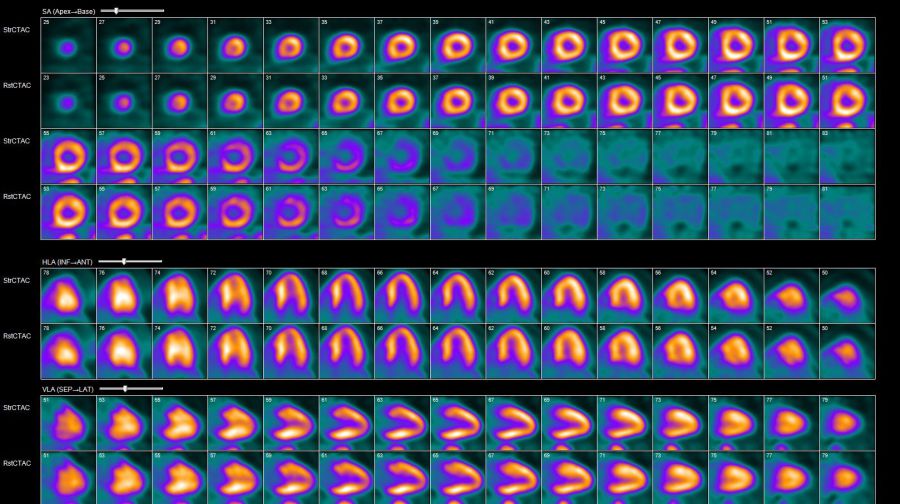
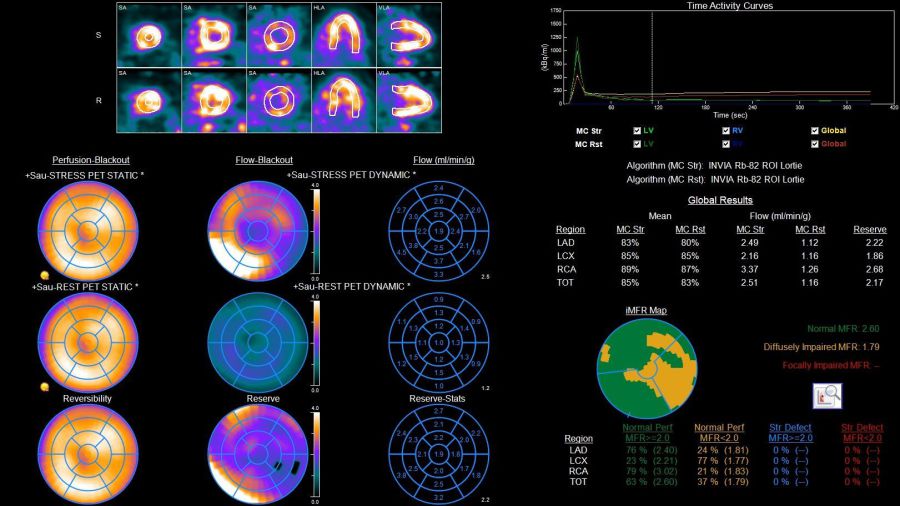
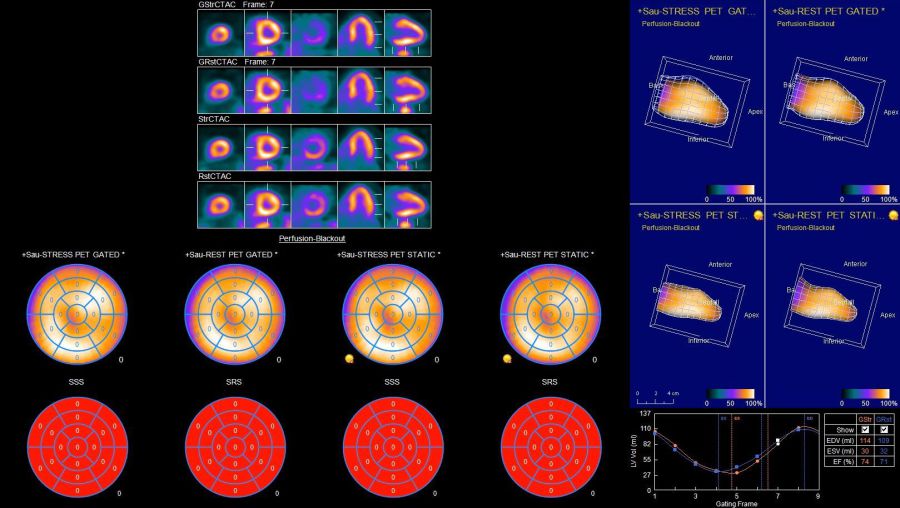
GE's Omni Legend keeps finding new ways to earn its keep.
Case in point: a 76 BMI patient, Rb-82 rest/stress MPI at 45mCi/45mCi.
7/21/26
Managing heart disease risk today usually means taking pills every day: a statin for cholesterol, a blood pressure medication, and sometimes a blood thinner to
prevent clots. CRISPR Therapeutics is working on a different approach: one-time gene-editing treatments that could target the same problems at
their genetic source. CTX310 uses a fat-based delivery system to bring gene-editing tools to the liver and lower a protein called ANGPTL3, which affects cholesterol and triglyceride levels. A
related treatment, CTX321, works the same way but targets Lp(a), a cholesterol-related particle that's controlled by genetics and currently has no approved drug treatment. CTX340 uses this same
delivery method to reduce a liver protein called angiotensinogen, aiming to help patients with high blood pressure that doesn't respond well to standard
medications.
For blood clot prevention, the most relevant program is CTX611, a long-acting treatment designed to block a clotting protein called Factor XI, which drives
harmful clotting while having little effect on the body's normal ability to stop bleeding. That's the key advantage over current blood thinners: today's anticoagulants reduce clotting broadly, which
is why they carry a real risk of bleeding. A treatment that blocks harmful clotting while leaving normal clotting intact would be a meaningful improvement. It's worth noting that CTX611 is
technically an siRNA treatment developed with a partner company, not a true gene-editing therapy, even though CRISPR groups it under its "In Vivo" pipeline
category.
None of these four treatments are approved yet. They're all still in earlier research or clinical testing stages, well behind CRISPR's one approved therapy for
sickle cell disease. Even if they succeed, they likely won't replace medication entirely for everyone: many patients have high blood pressure or cholesterol driven by multiple factors, not one gene,
and will still need lifestyle changes or standard drugs. But the idea itself is compelling for those of us in cardiovascular care: a single treatment with lasting effects, instead of a pill taken
every day for life. That shift, if it holds up in clinical trials, could change how we approach prevention for patients with early heart disease, hard-to-control blood pressure, or repeat blood
clots.
7/20/26
Every interpreter has a mental "at a glance" list: delta wave, think WPW; inverted P/T in lead I, think situs inversus; coved, saddleback ST in V1-V2, think
Brugada. A fourth pattern deserves a spot there: crochetage (kroh-sheh-tahzh), a notch near the R-wave apex in the
inferior leads (II, III, aVF), shown in Heller's 1996 series to appear in 73% of secundum ASD patients versus 7% of normal subjects, with specificity up to 92-100% when it hits all three leads or
pairs with an incomplete RBBB. The mechanism is heterogeneous RV contraction from chronic volume overload, the same logic underlying every other pattern on that list: a structural quirk leaves a
signature on the surface EKG.
Secundum ASD is the most common ASD type and is routinely missed clinically because the murmur is soft and symptoms are vague, so this is a free clue sitting
on EKGs already being read for other reasons. It's not pathognomonic (VSD, pulmonic stenosis, and cor pulmonale show it too, just less often), so treat it as a trigger for echo, not a replacement for
one.
Add crochetage to the muscle-memory list. It costs nothing to look for and has been in the literature since 1958.
7/10/26
VahatiCor recently enrolled its first U.S.
patient in a clinical trial for the A-Flux Reducer System, an implantable device designed to treat coronary microvascular dysfunction (CMD). This is a notable development: CMD patients present
with genuine, often debilitating symptoms (angina, dyspnea, exercise intolerance) yet show no obstructive disease on conventional angiography, leaving them without a targeted therapeutic
option.
The device is deployed via catheter into the coronary sinus, where it modestly restricts venous outflow to increase distal pressure and improve perfusion at
the microvascular level. For a population that has long been diagnosed by exclusion (normal angiogram, unexplained symptoms) rather than by a positive, actionable finding, this represents a
meaningful shift toward disease-specific intervention.
That shift also exposes a gap in how we currently screen for CMD. CCTA remains the dominant frontline tool for evaluating chest pain, but it is anatomically
limited: it visualizes the epicardial vessels, not the microvasculature, so by design it cannot detect microvascular disease. Cardiac PET, by contrast, quantifies myocardial blood flow and coronary
flow reserve directly, giving it a physiologic window CCTA simply lacks.
As device-based CMD therapies like this one progress through trials, the clinical incentive to identify these patients accurately, rather than rule them out by
omission, will only strengthen. That argues for cardiac PET's role expanding from a confirmatory or second-line study to a genuine frontline screening tool for symptomatic patients with
non-obstructive disease.
7/5/26
Keya Medical's DeepVessel FFR is the latest entry into the CCTA plaque and FFR-CT
space, joining names like Cleerly, HeartFlow, and Elucid. More vendors in a niche this specialized is healthy, pushing better accuracy, faster turnaround, and lower pricing. But the workflow
still involves exporting the CCTA, sending it to a third party, and waiting hours for a reconstructed report. It works, but it's friction, and one more vendor relationship to
manage.
A single CCTA study with extra cardiac phases can easily generate 5,000 to 7,000 images, which is why this work got offloaded to external servers in the first
place. That math is changing as GPU/CPU architectures, driven largely by AI demand, have advanced enough to handle that load locally. That's what makes the OEM angle interesting. GE has AW
Workstation, Siemens has syngo.via, and it isn't a stretch to imagine one of them acquiring this kind of IP and building plaque and FFR analysis directly into the workstation, no external node
required.
The only question left is which OEM moves first, and which third-party vendor becomes the acquisition instead of the competitor
?
7/3/26
A new study in the Journal of Nuclear Cardiology
looked at something every PET tech already records but rarely thinks twice about: how much the heart rate goes up during a regadenoson stress test. Researchers at Yale studied over 4,600 patients
and found that a weak heart rate response (less than a 20% rise from rest to peak) was linked to nearly three times the rate of heart attacks, heart failure, and death over the following years, even
after accounting for blood flow measurements from the PET scan itself.
This link between blunted heart rate response and worse outcomes has actually been described before in both SPECT and PET myocardial perfusion imaging going back over a decade. What's new here is the
scale of the cohort and the proof that it still matters even when you already have quantitative PET flow data in hand, something earlier studies couldn't fully
test.
That extra signal is likely picking up on the health of the autonomic nervous system, which blood flow numbers alone don't capture. Since blood flow and heart
rate response each added useful information on top of the other, combining them gave a better risk picture than either alone. The practical takeaway: this is a free, already-available data point
sitting in every regadenoson study. Building it into routine SPECT/PET MPI reporting could help flag higher-risk patients without ordering a single extra test.
7/1/26
This in-press Journal of Nuclear Cardiology study
from the Cedars-Sinai group (Slomka, Berman, et al.) examined whether adding coronary artery calcium scoring to flurpiridaz PET-MPI improves detection of obstructive CAD.
Using data from the flurpiridaz-301 phase III trial, 498 patients with known or suspected CAD underwent PET/CT imaging and invasive coronary angiography within six months. CAC scores were extracted
from the routine CTAC maps already acquired for attenuation correction, using both manual scoring and a validated AI deep learning model, then combined with automatically quantified stress total
perfusion deficit (TPD).
The results were straightforward: TPD alone produced an AUC of 0.84, while adding manual CAC pushed it to 0.87 and AI-derived CAC reached 0.88. The primary
gain was in specificity, not sensitivity, meaning the combination was particularly effective at correctly ruling out obstructive disease in patients with low or absent calcium burden. The AI and
manual CAC scores showed strong concordance (r = 0.85 overall), and critically, the CAC data came at no additional scan time, radiation dose, or technologist effort since the CTAC was already part of
the acquisition. On a per-vessel basis, the LCX benefited most from AI-CAC addition, which tracks with the known interpretive challenges in that territory.
As flurpiridaz moves into broader clinical adoption, sites running PET/CT already have everything they need to generate this incremental diagnostic value
automatically, with no workflow penalty.
6/29/26
AccurKardia just received a patent for an AI algorithm that detects cardiac amyloidosis from a standard 12-lead ECG, covering all major subtypes including AL
and both wild-type and hereditary ATTR.
The clinical stakes are real: studies estimate that 13-15% of heart failure clinic patients have undiagnosed amyloidosis, most identified only after
irreversible damage has occurred. The pitch is elegant, and frankly familiar: no new hardware, no new procedures, just a test already performed millions of times per year repurposed as a screening
biomarker.
Those of us who watched T-wave alternans technology emerge in the late 1990s have seen this movie before, a signal hidden inside a routine ECG, elevated by
machine analysis, promising to stratify risk before clinical events declared themselves. TWA never fully delivered on its commercial promise, but it legitimized the concept that the standard 12-lead
contained diagnostic information we weren't yet equipped to extract.
AccurKardia, and competitor Anumana, which received FDA clearance in April for a similar AI-ECG amyloidosis algorithm, are making the same foundational
argument with considerably more computational horsepower behind it. Multi-site validation still lies ahead, and skepticism is earned in this space.
But the question worth asking now is whether validated AI-ECG screening eventually repositions pyrophosphate scintigraphy from primary workhorse to a
confirmatory tool?
6/25/26
Where Did the Last 20 Years Go?
First, let me take a moment to thank Atlanta Heart Specialists for entrusting a very naive twenty-six-year-old with the task of vertically scaling its
operations. Looking back, I'm not sure either of us fully understood what we were signing up for. I'd like to think it worked out.
As of June 5th, I am stepping down as Imaging Director. To ensure a smooth transition, I'll continue supporting two exceptionally talented nuclear
technologists who will assume the majority of my responsibilities. They are more than ready, and frankly - they've earned it.
Twenty years is a long time to show up. And I mean that literally. I never missed a day, not when I lost my father, not during the six months I was technically
homeless after my house was burned down, and not when our Tucker facility lost power during a winter storm and someone had to haul a portable generator to the IT closet to keep our EMR and file
servers running. That someone was me. I don't say any of that for recognition; I say it because that is simply what the job required, and I believed the job was worth
it.
I would not be the professional, or the person, I am today without the imaging team that stood beside me through all of it. Patients keep the lights on, but
great staff make the work worth doing. They were always my first priority, and that will not change. If there is one thing I would pass along to anyone stepping into a leadership role: advocate
loudly for your people. Communication and reciprocity between leadership and the front line are not nice-to-haves; they are the whole ballgame. You can absolutely have your cake and eat it too, but
only if you're willing to share the recipe.
To those who stayed through COVID and the years of attrition that followed: you already know who you are, and you already know what that loyalty meant to me.
Some debts don't get repaid; they just get remembered. This is me remembering.
It has been a privilege, an adventure, and a twenty-year education that no classroom could have provided.
Onward.
6/25/26
The American hospital system isn't just under pressure; it's actively dissolving. Over 700 rural hospitals nationwide are at risk of closure, with more than half facing a
financial runway of three years or less. Georgia alone accounts for 35 of those facilities, and when these hospitals close, they don't get replaced. The emergency rooms, the labor and delivery units,
the imaging departments, the entire care infrastructure disappears with them, along with the workforce and referral networks built over decades.
Federal inaction at this point isn't a neutral posture. It's a choice to allow irreversible structural collapse in communities that have no fallback. The
window for meaningful intervention is closing, and policymakers need to treat this with the urgency it deserves before the damage becomes permanent.
6/20/26
The SUNY rail-based PET detector patent (US12213820B2) is worth a closer look because its modular design philosophy mirrors something cardiac imaging already
proved works: GE's Discovery NM 530c, a dedicated cardiac SPECT camera that fits in a room the size of a large home office by eliminating the rotating gantry, arranging fixed detector panels in a
compact arc, and letting reconstruction software handle the rest.
The SUNY patent applies that same instinct to PET, mounting modular detector units on adjustable rails around a compact circular frame instead of building a
costly continuous detector ring. Scale the rail geometry down to a cardiac field of view, pair it with the fast silicon photomultiplier detectors available today, and you have the architectural bones
of a dedicated cardiac PET camera that could realistically fit into existing cardiology office infrastructure.
Why does this matter right now? The FDA approved flurpiridaz (Flyrcado) in 2024, and is now available as unit doses through an expanding network of regional
cyclotron facilities across the US, removing the last major logistical barrier that kept quantitative cardiac PET confined mostly to academic medical centers.
What the field still lacks is a small-footprint, point-of-care, cardiac-centric PET camera that community cardiology practices can actually install and afford.
The blueprint for that camera may already be sitting in a patent database ?
6/14/26
Subtle Medical just cleared SubtleHD™(PET) and I felt a wave of déjà vu.
Up to 75% faster PET on the scanners you already own. Every FDA-approved tracer.
Nuclear med folks, that should ring a bell. It's the UltraSPECT playbook: same camera, smarter math, faster scans, just aimed at PET this
time.
Three things make it matter, and they're the same three I always valued:
→ Faster scans on existing scanners. Shorter exams aren't a luxury: they're mercy for our oncology, pediatric, and critically ill patients, and faster
throughput for busy departments.
→ Vendor neutral. Works no matter whose badge is on the gantry.
→ Cloud OR on-prem. You get to choose where the data lives.
Can't help but throw in some feature requests: intrinsic motion correction baked into the formula. Patient motion correction for PET, coronary motion
correction for CCTA. And while we're dreaming, AI contrast enhancement for CT and dose-reduction options for PET.
There's something glamorous about software that unglamorously squeezes more out of what's already installed.
5/14/26
The NRC is using that number to justify eliminating 37.25(c) entirely, and the logic is hard to argue with, but it raises a more uncomfortable question than
the rule itself answers.
Either the requirement was performative, or we are asked to believe that initial clearances have a perfect ten-year shelf life. The behaviors that actually predict insider risk don't show up on an
FBI rap sheet at year ten and 37.23(e)(4) already lets reviewing officials terminate access at any point based on information that surfaces in between. That's the provision doing the real work. The
10-year refresh was a ritual.
Removing it doesn't make sources meaningfully less secure, but it also doesn't push those (RSO's, security cleared tech's, etc.) to think harder about what actually would surface a trustworthiness
problem in someone who has already cleared the front door. That conversation isn't in the proposed rule, and judging by the four whole comments on the docket, it isn't happening anywhere else either.
Maybe it should be?
5/13/26
The EPA says there is no safe level of radon. Bad Gastein, Austria sees about 75,000 patients a year for medically supervised radon
therapy.
Somebody has to be wrong.
The Austrians have been at this since the 1800s. Patients with ankylosing spondylitis, rheumatoid
arthritis, and chronic inflammation soak in radon-enriched baths or sit in a "healing gallery" with airborne radon concentrations up to 100 kBq/m³, the same gas we test U.S. basements for and tell
homeowners to remediate yesterday. Russia reportedly delivers around a million radon treatments a year across 5,000 hospitals.
Same noble gas. Same lungs. Two completely opposite public health regimes separated by an ocean
So who's right? If the Europeans have a point, a lot of U.S. radiation protection, including how we counsel patients on imaging dose, needs a serious rewrite
(Cue the LNT model challenge).
I'm not advocating for radon spa franchises here in Atlanta (although if they did exist, I'd name them 'Curie Up & Soak' :D). I'm just noting that "the
science is settled" tends to look a little different depending on which side of the Atlantic you're standing on.
5/11/26
Allow me to introduce the era when radioactivity was aspirational. From the 1920s through World War II, a German company called Auergesellschaft sold Doramad, a toothpaste containing thorium (a radioactive metal) with the enthusiastic
claim that it loaded your cells with "new life energy" and supercharged your gum defenses. The product was originally devised as a way to use up waste byproduct from their gas lantern
manufacturing operation. Leftover thorium. Toothpaste. Sure, why not.
As someone who has spent 20+ years working with radioactive tracers in a controlled, clinically indicated setting, I find this story equal parts horrifying and
oddly charming. It's a useful reminder that the history of health technology is littered with confident claims that didn't survive contact with evidence and that oversight, and the willingness to say
"we got that wrong" are what separate science from salesmanship. Also: please just use fluoride.
5/4/26
Big news in cardiac imaging: Bayer's investigational PET tracer iodine-124 evuzamitide met its primary endpoints for both sensitivity and specificity in the Phase III REVEAL study, evaluating patients with
suspected cardiac amyloidosis across 19 U.S. centers. The compound, which previously received Breakthrough Therapy Designation and Orphan Drug status for both AL and ATTR subtypes, works by
allowing cardiac PET/CT imaging to visually identify or exclude amyloid deposition in the myocardium with secondary analyses assessing performance across both disease
variants.
This matters enormously at the clinical level. Those of us in cardiac imaging know that current SPECT bone-avid agents like pyrophosphate are effective for
ATTR amyloidosis, but have well-documented sensitivity limitations for light chain (AL) amyloidosis, a subtype that often goes undetected or misdiagnosed until advanced organ involvement. A
sensitive, specific, and quantitative PET tracer could help distinguish cardiac amyloidosis from other causes of heart failure, differentiate amyloid subtypes alongside appropriate lab testing, and
even track changes in myocardial amyloid burden over time filling a critical diagnostic gap that has long frustrated clinicians and delayed appropriate treatment for AL
patients.
5/3/26
A former Philadelphia oil refinery is being transformed into a cutting-edge nuclear life sciences hub TerraPower Isotopes (part of a nuclear science company founded by Bill Gates) recently
broke ground on a 250,000-square-foot manufacturing facility at the former Philadelphia Energy Solutions refinery site, with a planned $450 million investment. The goal: producing actinium-225, a
rare radioactive isotope showing real promise as a precision cancer therapy. Currently in clinical trials for cancers including breast, prostate, and myeloid leukemia, the isotope works by attaching
to targeting molecules that seek out and destroy cancer cells while sparing healthy tissue.
What makes this particularly significant is the scale of impact. Global supply of actinium-225 is currently so limited it amounts to just a few grains of sand,
but when the Philadelphia facility comes online in 2029, it's projected to increase worldwide production capacity by 20 times. The project is expected to bring 225 full-time jobs and 500 construction
jobs to the region, and was selected from 350 competing sites nationwide.
5/2/26
As imaging professionals, we've spent careers pushing the boundaries of what we can see inside the human body but the newly launched Human Organ Atlas may just
raise the bar entirely. Researchers at the European Synchrotron Radiation Facility developed a technique called hierarchical phase-contrast tomography (HiP-CT), using a particle accelerator to
generate X-rays of extraordinary intensity. According to the project's own researchers, the resulting resolution is approximately 1,000 times greater than modern CT scanners enabling whole-organ,
three-dimensional datasets resolved down to a single cell.
What's particularly exciting from a clinical and AI standpoint is where this is headed. The atlas already includes 87 organs from 54 donors, with disease
states ranging from COVID-related vascular damage to cardiac pathology, all freely accessible to researchers, educators, and AI developers. As machine learning continues to reshape diagnostic
imaging, having this kind of high-resolution, pathology-rich training data could meaningfully accelerate what our algorithms are capable of detecting. Worth keeping an eye
on.
5/1/26
For decades, diagnosing endometriosis has required invasive laparoscopic surgery, contributing to diagnostic delays of up to 12 years for millions of women.
A newly published phase 2 study (DETECT trial, Oxford) used ⁹⁹mTc-maraciclatide SPECT-CT,
a radiotracer targeting αvβ3 integrins upregulated during angiogenesis, to image endometriotic lesions non-invasively before surgery.
Results showed 82% sensitivity and 100% specificity, and critically, it detected superficial peritoneal endometriosis, the most common subtype and the one that
has always evaded ultrasound and MRI.
This one hits close to home for me as endometriosis runs deep in my family, and I've watched loved ones struggle for years with debilitating symptoms before
finally getting answers through exploratory surgery. No one should have to wait that long for a diagnosis.
As someone working in SPECT and PET imaging daily, what strikes me is that this isn't exotic technology, it's a smart application of infrastructure that
already exists throughout the globe. We've always known functional imaging finds disease that anatomy misses.
It's long past time that principle was applied to a condition affecting 190 million people worldwide. A phase 3 trial is planned: it can't come soon
enough!
4/18/2026
Certificate of Need laws were established in 1974 under a federal mandate to control healthcare costs. That mandate was repealed in 1986, yet 35 states -
including Georgia - still enforce them. A recent Becker's ASC article titled "It's antitrust. We all know it": The case for killing certificate of need captures what many of us in healthcare have long observed: CON laws
don't control costs, they control competition. Research shows patients in CON states pay roughly 11 percent more for care and have access to 30 percent fewer hospitals per capita. These aren't
safeguards. They're monopolies.
Georgia is a textbook example. Despite incremental reforms like HB1339's ASC exemptions, the state's CON framework remains largely intact. As I wrote on my
blog in March 2024 (r-paul.com/blog/2024),
Georgia's rule 111-2-2-.21 still prevents private cardiology practices from performing cardiac catheterization or EP procedures in an outpatient setting, not for patient safety, but for market
protection. Meanwhile, 10 Georgia rural hospitals are at immediate risk of closing, and the state carries one of the highest uninsured rates in the country. These communities aren't suffering from
too much competition. They're suffering from too little.
The FTC has repeatedly condemned CON laws as categorically harmful, and the current administration has tied Rural Health Transformation funding to their
elimination. Georgia's legislature has discussed CON reform since the mid-2000s. The conversation is long overdue for action. It's not complicated. It's antitrust. We all know it and it's time for
change!
4/15/2026
Let me start this post by stating: I've had the privilege of interacting with both HeartFlow and Cleerly on literally a day-to-day basis. Genuinely great teams
on both sides, doing meaningful work to advance coronary artery disease diagnostics for patients.
But now that HeartFlow has filed a patent infringement lawsuit against Cleerly… I feel like I'm living in a cardiology Twilight
saga.
You've got HeartFlow, with over 600 patents, mysterious FFR powers, went public, sparkles under the Nasdaq sunlight. That's Edward
energy.
Then there's Cleerly: the scrappy newcomer who showed up and immediately started turning heads with AI plaque analysis. Younger, aggressive. Pure Jacob
energy.
But I do have to give kudos to HeartFlow's legal team because this filing isn't just a complaint, it's a screenplay. It literally opens
with:
"Heartflow's story began not in a boardroom, but in a hospital bed. In 1978, a fifteen-year-old boy named Charles Taylor lay near death from a ruptured
appendix…"
That's not a patent filing. That's the first chapter of a medical thriller.
I fully expect Cleerly's response to open with a dramatic childhood flashback of its own.
So.....Team HeartFlow or Team Cleerly?
**In all seriousness the claims in this lawsuit are significant, and the outcome could have real implications for innovation, intellectual property, and
competition in the cardiac AI space. Both companies have contributed to advancing patient care, and how this plays out matters.**
***Or hear me out, plot twist: Cleerly just buys out HeartFlow's debt, they merge, and we get the ultimate crossover nobody asked for but every cardiologist
secretly wants. One platform. All the AI. No more choosing sides. Call it ClearFlow. HeartLeerly. I don't care. Just stop making me log into two portals.***
Adobe Acrobat document [6.3 MB]
4/1/2026
"A Harvard University economist claims that imaging volumes are falling in the U.S., blunting the need for more
radiologists."
As someone with nearly two decades in cardiac imaging overseeing SPECT, PET, ECHO and CT, I'd challenge this claim based on everything I've witnessed firsthand
in a post-COVID clinical environment. Volumes have not declined; in most modalities, they've grown substantially.
The rural access angle deserves serious consideration, too. Rural access disparities are a well documented pressure point. Smaller hospitals and imaging
centers in less populated regions struggle to attract and retain radiology talent, widening the care gap.
It's reasonable to ask whether rural hospital closures are effectively funneling patients and their imaging demand into suburban and urban centers, creating a
concentration effect that inflates volume in some markets while masking a utilization drop in others. That kind of geographic redistribution could look like "falling volumes" in aggregate data while
clinical staff in high-volume centers are stretched thin.
3/3/26
RadNet just earned European certification for TechLive, technology that lets techs remotely operate multiple imaging machines from a single location. The pitch is: address
workforce shortages, boost efficiency (they're seeing 42% fewer room closures). But here's what keeps me up at night: one technologist managing multiple CT, MR, and ultrasound machines across
different sites remotely.
What happens when you need hands-on intervention in an emergency? What about connection delays or cybersecurity vulnerabilities? And let's be honest, patient
monitoring and liability become murky when your tech isn't physically present.
I'm not saying remote operations are inherently bad. But before we normalize this across healthcare, we need to ask hard questions about safety protocols,
backup systems, and who's liable when things go wrong. Efficiency matters, but not at the expense of patient care.
What's your take? Are we moving too fast on this, or am I overthinking it?
2/28/26
Researchers at Japan's QST have achieved a remarkable milestone in PET technology: the
first scanner to break the sub-0.5 mm resolution barrier, reaching 0.67 mm. To put this in perspective, most modern clinical PET scanners used in hospitals today operate at around 4–5 mm
resolution, optimized for whole-body human imaging. The team's next goal? Sub-0.3 mm resolution.
2/18/26
Attached is a significant policy document, a DOE memo from January 9, 2026, that approved removing the "As Low As Reasonably Achievable" standard from its radiation rules, arguing that the Linear No-Threshold model it's based on lacks scientific support and creates unnecessary costs for the nuclear industry. They're citing an INL report suggesting doses under 5,000 mrem/year haven't shown detectable health effects. Curious where people land on this: overdue course correction backed by evidence, or risky erosion of precautionary standards?
Adobe Acrobat document [2.2 MB]
2/9/26
The American Society of Nuclear Cardiology (ASNC) has reported a significant shortage of key radiotracers used for the noninvasive diagnosis of transthyretin (ATTR) cardiac amyloidosis, including technetium-99m pyrophosphate (Tc-99m PYP) and Tc-99m hydroxymethylene diphosphonate (Tc-99m HMDP/HDP). This supply disruption, driven by vendor issues such as unavailable stock from Sun Pharmaceutical and limited production from Curium due to active ingredient challenges, is expected to continue for months—potentially into at least Q2 2026. With rising demand fueled by effective new therapies that improve patient outcomes, this shortage is frustrating clinicians and threatening timely access to a diagnostic pathway that has revolutionized early detection of ATTR cardiac amyloidosis, avoiding more invasive procedures like endomyocardial biopsy.
2/3/26
The International Atomic Energy Agency (IAEA) has released key findings from its major
MEDBIODOSE coordinated research project, which united 31 institutions from 27 countries—including Australia, Brazil, Ghana, the United Kingdom, and many others across all continents. Running
since 2017, the initiative focused on biodosimetric markers and methods in radiation oncology, nuclear medicine, and diagnostic/interventional radiology. Researchers collected and analyzed real-world
patient data, including cytogenetic markers (such as chromosomal aberrations) and molecular indicators (DNA damage proteins and gene expression changes), to improve the accuracy of radiation exposure
estimation and biological response assessment.
This truly international effort has produced one of the largest harmonized datasets in the field, validated promising new biomarkers, and laid critical
groundwork for more personalized and safer radiation treatments. The results support better prediction of side effects, identification of radiosensitive individuals, and enhanced clinical
decision-making—potentially integrating future AI-assisted tools.
1/15/2026
Leveraging the SEC's EDGAR database, savvy professionals can dissect a competitor's 10-K (annual) and 10-Q (quarterly) filings to craft targeted strategies. These documents reveal critical financials like revenue
trends, debt levels, and profitability metrics, exposing vulnerabilities such as overreliance on specific markets or rising operational costs that one can exploit through competitive pricing or
innovation.
1/10/2026
The FDA has approved Cardamyst (etripamil) nasal spray from Milestone
Pharmaceuticals—the first self-administered treatment for acute episodes of paroxysmal supraventricular tachycardia (PSVT) in adults. This innovative calcium channel blocker allows patients to
rapidly restore normal sinus rhythm at home, with clinical trials showing a median conversion time of just 17 minutes versus 53-54 minutes for placebo. By empowering patients to manage unpredictable
episodes outside clinical settings, Cardamyst has the potential to reduce emergency visits and improve quality of life for millions living with PSVT.
 Print
Print 